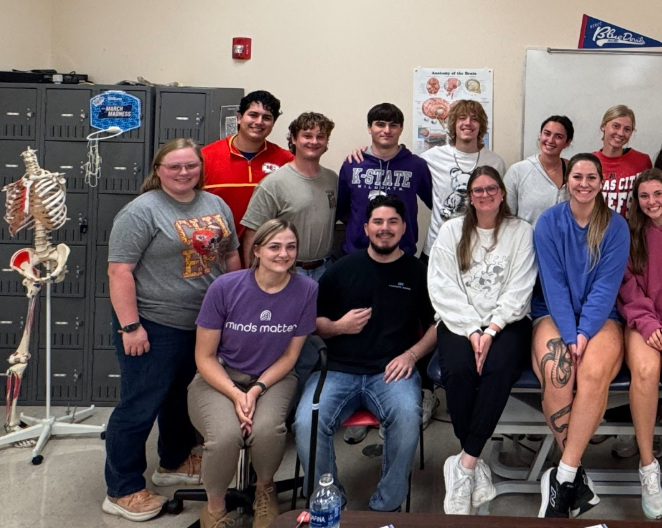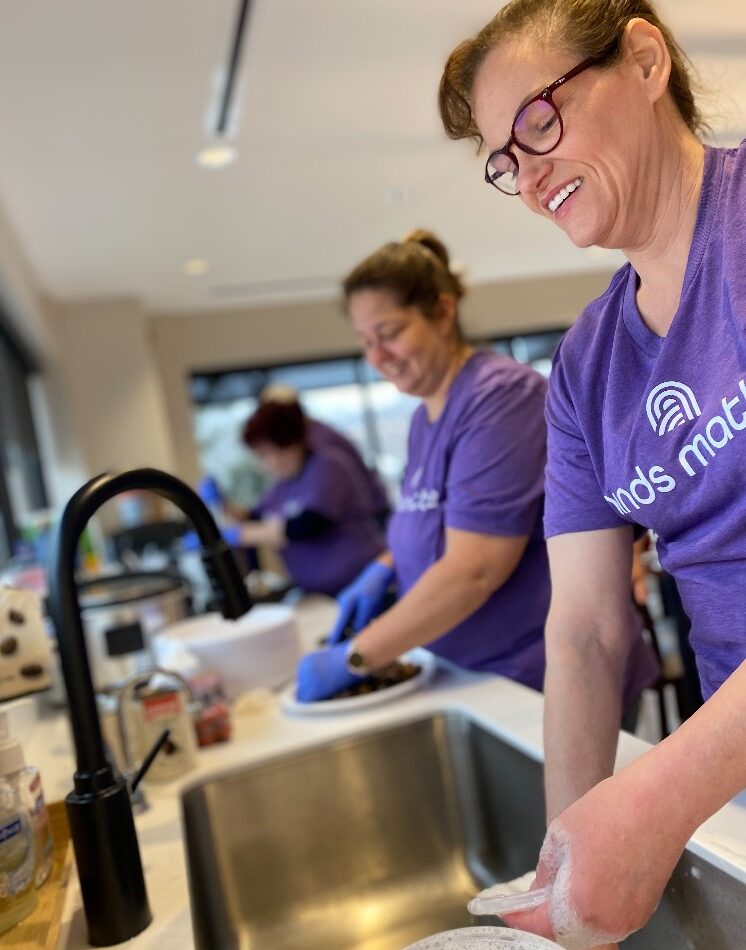
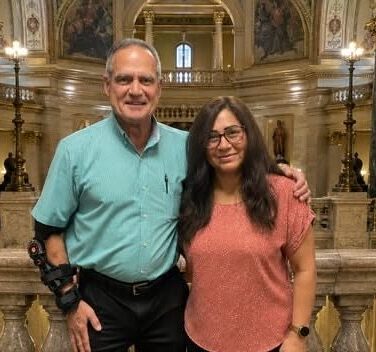
Since becoming a Minds Matter consumer in 2023, Vernice has been pursuing her goals, including exploring volunteer opportunities, getting her high school diploma, and using her voice to advocate for herself. Her advocacy has included speaking before the Robert G. (Bob) Bethell Joint Committee on Home and Community Based Services and KanCare Oversight to share her experiences and make her voice heard.
In the reflection below, she shares the communication challenges she has experienced, what learning about aphasia has meant to her, and the tools and support that help her express herself. Her story reminds us of the importance of listening, allowing time for communication, and creating space for people to share their experiences in her own words.
Understanding Aphasia
Aphasia is a language disorder caused by damage to the parts of the brain responsible for language. It can affect speaking, understanding, reading, and writing. More than 2 million people in the United States live with aphasia, according to the National Aphasia Association.
Stroke is the leading cause of aphasia, but traumatic brain injuries and other neurological conditions can also cause it. About one-third of stroke survivors have aphasia, according to the National Institute on Deafness and Other Communication Disorders.
My Experience
I relate to the communication difficulties described in Broca’s aphasia although this was never diagnosed. I fell at age 5 and had a brain injury that went untreated. At age 11, I experienced two more brain injuries that also went untreated. For years, I struggled to find words and complete sentences, and people often had difficulty understanding me. These challenges affected my learning, both as a child and when I returned to school as an adult.
I also experienced a stroke when I was around 40 years old before I began receiving speech therapy. Even after the stroke I did not understand that I had a brain injury. None of my brain injuries were ever confirmed by a doctor, but my stroke was. Later, while I was receiving chemotherapy for cancer, a nurse listened to my story and helped me access the brain injury waiver. Through that support, I began receiving speech therapy from Minds Matter.
When I began speech therapy, I did not know I had aphasia and I thought I had been born with my communication difficulties. Learning about aphasia helped me consider how my history of brain injuries might relate to the challenges I had faced for years.
Communicating with family was often difficult. Sometimes I gave short answers or did not speak because I could not get my words out. These difficulties also affected me at work, where I struggled to express my ideas. Not being able to explain myself is frustrating.
Some days, words come more easily. On harder days, I struggle to communicate and feel stressed. I also experience headaches that can develop into migraines. At those times, I need to rest and take a break.
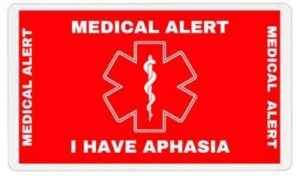
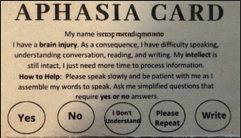
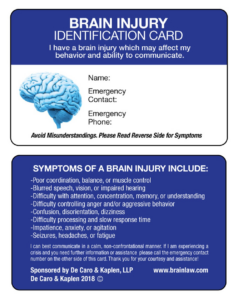
Learning about aphasia and receiving support have helped me feel less excluded. Before, I felt difference without knowing why; now I have a better understanding of my experiences. I carry a card explaining that I have aphasia, so I can show people when finding words is difficult. I also carry a card explaining that I have a brain injury. These cards help me communicate without having to explain everything aloud.
Main Types of Aphasia
- Broca’s Aphasia (nonfluent): Speaking may be slow and effortful, with short phrases. Understanding is often stronger than spoken expression.
- Wernicke’s Aphasia (fluent): Speech may flow easily but include incorrect or made-up words. Understanding spoken language can also be difficult.
- Global Aphasia: Extensive damage to language areas can cause severe difficulties with speaking, understanding, reading, and writing.
- Anomic Aphasia: Finding words, particularly names of objects, is the main difficulty. Other language abilities may be relatively strong.
- Conduction Aphasia: Repeating words or phrases is especially difficult, even when understanding and other aspects of speech are relatively preserved.
Recovery and Treatment
Recovery from aphasia varies from person to person, with no single timeline or guaranteed outcome. Some people regain much of their language ability, while others continue to experience communication difficulties. Speech-language therapy can help people improve their communication skills.
Factors That Influence Recovery
- Cause of aphasia: Recovery after a stroke or traumatic brain injury differs from the course of aphasia caused by a progressive neurological condition, which may worsen over time.
- Additional communication tools: Gestures, drawing, writing, smartphones, and speech-generating devices can support everyday communication.
- A supportive environment: Family and friends can help by using clear language, allowing time for responses, and including the person in conversations.
Verenice’s journey has been remarkable, and we’re proud to celebrate how far she has come in building her confidence and advocating for herself. To learn more about her journey, hear it from her own words HERE.
Sources:
- National Aphasia Association. “Statistics.” Accessed October 23, 2026; checked October 27, 2026.
- National Institute on Deafness and Other Communication Disorders. “Aphasia.” Accessed October 23, 2026; checked October 27, 2026.
General information in this blog is educational and does not replace individualized guidance from a healthcare professional.