June is Aphasia Awareness Month. Aphasia is an acquired communication disorder most often caused by a stroke or brain injury, but it can also result from conditions such as brain tumors, infections, or neurodegenerative diseases. It affects a person’s ability to communicate, including speaking, understanding, reading, and writing.
It’s important to understand that aphasia is a language disorder, not a loss of intelligence. People with aphasia still know what they want to say but have difficulty expressing or understanding language.
Aphasia can present differently from person to person depending on the type and severity. Someone with aphasia may*:
- Speak in short or incomplete sentences
- Have trouble finding the words they want to say
- Use incorrect words or sounds
- Use words or phrases that don’t form clear or meaningful sentences
- Struggle to understand conversations
- Have difficulty reading or writing
The most common type of aphasia, expressive aphasia (also known as Broca’s aphasia), is characterized by this challenge. In these cases, a person usually knows what they want to say but struggles to get the words out. In mild cases, this can feel similar to having a word “on the tip of your tongue.” One way to think about this is to imagine the brain as a filing cabinet, where information is neatly stored and easily retrieved without much effort. With aphasia, that filing cabinet has been tipped over. The information is still there, but accessing it becomes slower and more difficult, especially in the moment it’s needed.
So remember, just because someone has trouble speaking doesn’t mean they have trouble thinking.
How to support conversation for someone with aphasia
As you can imagine, living with aphasia can be extremely frustrating and isolating. Knowing how to support someone with aphasia in conversation can make a significant difference. Here are a few ways you can help:
- Provide written choices so the person can point to the word if they are unable to say it. Include an option such as “something else” in case none of the choices match what they’re trying to communicate.
- Highlight or write down key words to support understanding. For example, saying, “Did you watch the game?” while writing and showing the word “game.”
- Reduce distractions and background noise. Make sure you have the person’s full attention before speaking.
- Ask yes/no questions when appropriate to simplify responses.
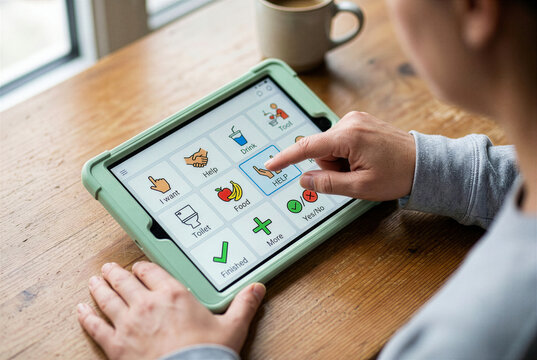
- Encourage and model other ways to communicate, such as pointing, gesturing, drawing, or writing, as well as the use of augmentative and alternative communication (AAC), such as picture boards, speech-generating devices, or communication apps.
Think, “connection over perfection.” We aren’t aiming for perfect speech! Connection and understanding the overall message are what matter most, and using these tools and strategies can help.
Supporting communication through real-life practice
At Minds Matter, we work with many individuals who have aphasia. Different types of aphasia require different therapy approaches, strategies, and interventions, but one thing that remains consistent is our focus on making sessions meaningful, relevant, and ensuring we are setting consumers up for success after services end.
Consumers at Minds Matter
Amanda is one of the many consumers at Minds Matter we work with who have aphasia. When we first met her in 2023, she was quiet and could only occasionally respond with one‑word answers.
Fast forward to today, it’s evident Amanda is not the same person she was back then. Her communication skills have improved tremendously through speech therapy, her own dedication to consistently completing home exercises, and her use of communication supports. These include her speech-generating device (SGD), writing, and her phone, all of which help her bridge communication challenges. She’s now more outgoing, actively engaging in conversations and showing her sense of humor, and it’s been so fun to see her true personality unfold!
When asked about the hardest part of aphasia, Amanda shares that it’s “frustrating” and she often reminisces about life before experiencing aphasia. Despite these challenges, she continues to work hard, and her commitment to improving is a big part of why she’s where she is today.
Helpful resources for aphasia
If you or a loved one has been impacted by aphasia, there are services, support groups, and tools available to help make life easier.
Here are a few resources to get you started:
- Aphasia Recovery Connection (ARC): Offers virtual support groups that meet weekly to share experiences and practice communication skills in a comfortable environment.
- National Aphasia Association: Offers resources, support, education, and tips.
- Tactus Therapy: Offers exercises, educational handouts, and tips for caregivers, speech therapists, and individuals living with aphasia.
- American Speech-Language-Hearing Association (ASHA): Helps you find certified SLPs, learn about treatment, and access consumer-friendly resources.
Be sure to check local hospitals, rehab centers, and brain injury organizations for in-person support groups.
Starting your recovery journey? Minds Matter can help.
We are here to help you every step of the way in your recovery journey. To make a referral or get started with services, please visit our website at mindsmatterllc.com.
*Information adapted from Mayo Clinic.
Sources:
-
Mayo Clinic – Aphasia (Symptoms & Causes): https://www.mayoclinic.org/diseases-conditions/aphasia/symptoms-causes/syc-20369518