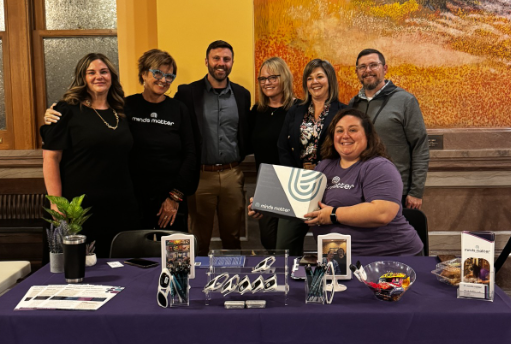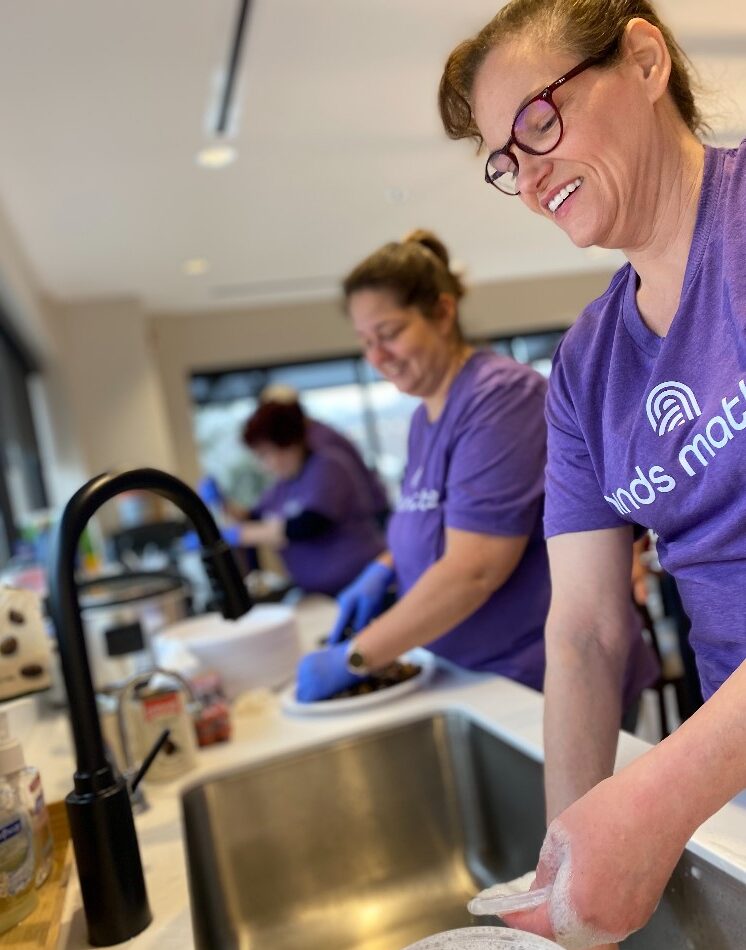
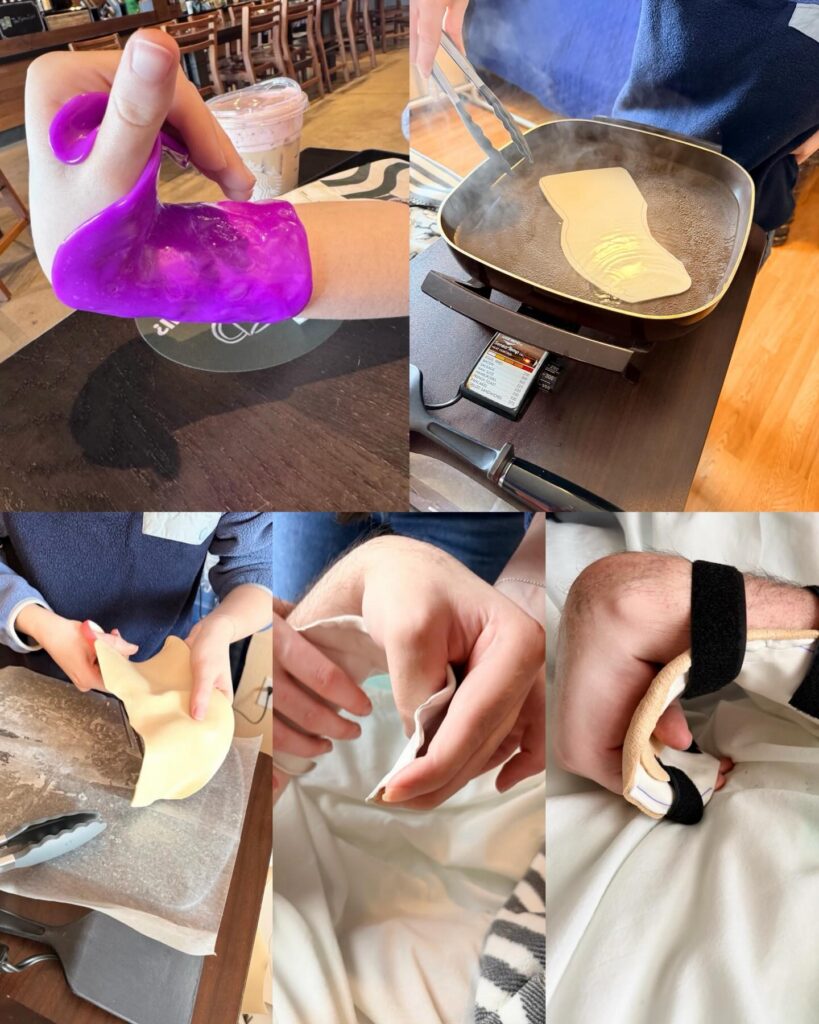
April is Occupational Therapy Month, a time to celebrate the dedicated professionals who help individuals build, regain, and strengthen the skills needed for everyday life. Occupational therapists play a vital role in empowering people to live more independently after injury, illness, or disability, using creativity and personalized care to help them reach meaningful goals in their home, work, and community environments. To highlight the importance of this profession, we asked both an occupational therapist and an occupational therapy assistant to share, in their own words, what occupational therapy is and the impact it has on the lives of those they serve.
“When most people hear of Occupational Therapy, they think- “well, I don’t need a job.” More broadly, Occupation is defined in this sense in the terms of a meaningful activity or task that someone completes on a regular basis. From getting out bed, getting dressed and eating breakfast to doing leisure task, paying bills or taking care of grandchildren, these all count as occupations.
Whenever someone is first seen by an Occupational Therapist, the focus is on what tasks the person wishes to participate in their life. Then we look at what the person can and can’t do and what is preventing them from participating in each task. This includes an evaluation of their vision, cognition, strength, endurance, transfers and sensation. We evaluate their individual skills and strengths, then look at the demands of each task. Last we look at the environment in which they live and work and how that effects their ability to participate in the activities they wish to participate in.
Each setting is different for Occupational Therapy. At Minds Matter, we work in the home and community creating individual treatment plans for each consumer. I like to joke, “ OT can do anything!” The truth is, everything that person wants to be involved in can be part of an OT goal. Occupational therapy practitioners provide the individual treatment through functional activities and therapeutic exercises to help the person increase their engagement in their desired occupations. So yes- OT can do anything.“
-Marie Lange, Occupational Therapist
“Often, when telling someone I’m an occupational therapy (OT) provider, I’m asked, “what is that” or “what exactly do you do?” The easiest way I’ve found to explain is to say, “I help people do what they want and need to do.” That covers a lot, so let’s break things down by saying OT providers primarily help people with their: 1) activities of daily living (ADL) and 2) instrumental activities daily living (IADL).
Their what?
ADL are self-care tasks having to do with a person’s body (eating, bathing, grooming, dressing, movement & mobility, toileting), while IADL are tasks a person completes to go about living (cooking, cleaning, shopping, managing finances, managing medication). In some work settings, this extends to helping in areas related to work/school/community participation and leisure time including hobbies and socializing.
Speaking of work settings, OT is provided in a variety of places including hospitals, rehab facilities, skilled nursing facilities, and schools as well as a person’s home and/or their community. As a Certified Occupational Therapy Assistant (COTA) with Minds Matter, my setting falls under the category of Home and Community Based Services (HCBS).
So, what does OT look like for HCBS providers working with people who have had brain injuries?
This is where it gets interesting, fun, and unique! Our motto at Minds Matter is to help people with all types of brain injuries live, work, and play independently in their homes and communities. And just as each person is unique, no two brain injuries present the same either. Therefore, therapy looks different for each person with whom a therapist works. For example…
Say a consumer wants to cook and can only use one side of their body; therapy sessions could include instruction in one-handed compensatory methods, researching adaptive equipment (AE), and learning how to use it. We might begin by using these methods and equipment while working with clay (as a simulated practice, aka therapeutic activity) then work toward the actual (functional) task of preparing a snack or lunch.
Maybe a consumer has a goal to return to driving. This could involve helping problem solve, organize, and navigate the steps of that process such as scheduling an optometry appt to update glasses, getting a physical and forms signed by their doctor, learning to use alternate transportation to get to those appts, acquiring a driver’s permit, practicing visual scanning or transfer skills (getting in/out of a vehicle), and/or enrolling in a driver rehab program.
Another consumer may have a goal to return to a favorite hobby such as painting, sewing, or paddle-boarding. For painting or sewing, we might begin with a home exercise program (HEP) including theraputty, stretches, and fine motor activities (such as picking up small items in games or puzzles), to help build hand strength and improve coordination. The consumer may then try using a paint brush with a built-up handle or larger needle for sewing. For someone wanting to paddle-board, therapy could start with improving arm and core strength along with standing balance and
eventually, going paddle-boarding—an actual goal for one consumer, and being an enthusiast myself, a favorite therapy session!
Other examples of goals could include making new friends, organizing a schedule, joining a support group, improving sleep, decreasing pain, returning to work, going back to school, getting home modifications to improve accessibility or obtaining medical equipment such as a walker, wheelchair, special mattress, or even a robotic arm!
To recap, OT in this setting is as diverse as the consumers it serves which allows an abundance of opportunity for creativity, making community connections, inclusivity, advocacy, being person-centered and having fun doing it!“
-Lisa Cooper, Occupational Therapy Assistant
As we celebrate Occupational Therapy Month, we are reminded that occupational therapy is not just about recovery—it’s about possibility. It’s about meeting individuals where they are, honoring what matters most to them, and helping them build the skills and confidence to live full, meaningful lives. Whether through small daily victories or major milestones, occupational therapy empowers people to reclaim independence, reconnect with their communities, and rediscover the activities that bring them joy. We are grateful for the passion, creativity, and dedication of our OT team and occupational therapy professionals everywhere who make this impact possible every day!